Smart Irrigation Systems: Advanced Solutions for Water-Efficient Landscaping
Water management is a growing concern in landscaping, agriculture, and urban green spaces. Smart irrigation systems offer a high-tech solution, allowing precise water delivery based on real-time conditions. These systems optimize water usage, reduce waste, and improve plant health, making them essential for sustainable outdoor spaces.
This article provides an in-depth exploration of smart irrigation systems, including technology, practical applications, benefits, real-world examples, and frequently asked questions.
Understanding Smart Irrigation Systems
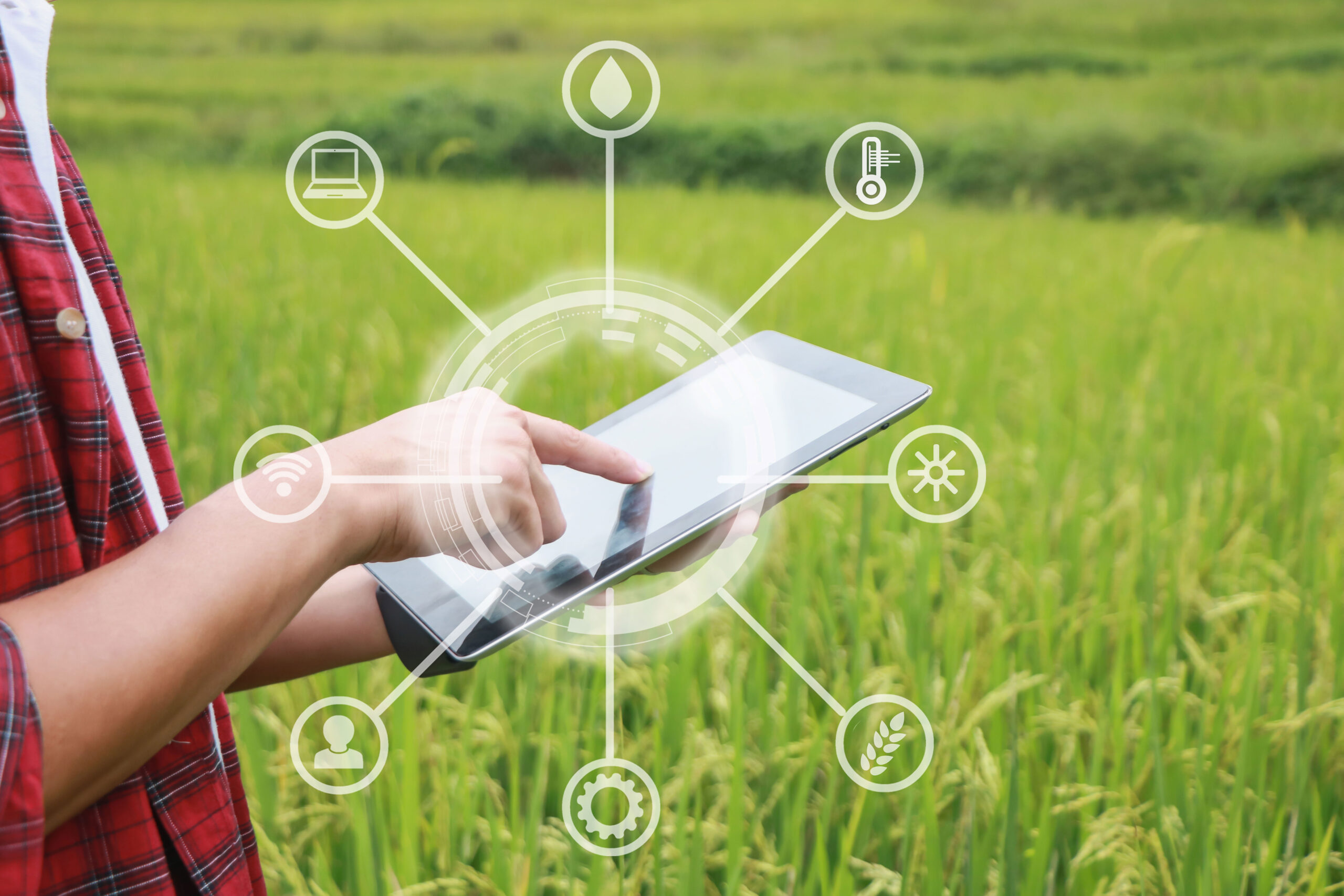
Smart irrigation systems are advanced watering solutions that use sensors, weather data, and automation to deliver water efficiently. Unlike traditional sprinklers or manual watering, these systems adjust watering schedules according to soil moisture, temperature, and rainfall, ensuring that plants receive the right amount of water at the right time.
By combining hardware, software, and connectivity, smart irrigation systems help conserve water, reduce costs, and promote healthy landscapes. They are suitable for residential gardens, commercial properties, public parks, and agricultural fields.
Key Components of Smart Irrigation Systems
Sensors and Monitoring Devices
Smart irrigation systems rely on sensors to monitor soil moisture, temperature, and humidity. Soil moisture sensors detect the water content in the soil, preventing overwatering or underwatering. Weather sensors or integration with local weather forecasts allows the system to adjust watering schedules automatically.
Automated Controllers and Software
Central controllers, often connected to cloud-based software, manage irrigation zones and schedules. Homeowners and landscape managers can access real-time data and control the system remotely via mobile apps. These controllers enable precise timing and duration of watering, optimizing efficiency.
Connectivity and IoT Integration
Modern smart irrigation systems integrate with IoT (Internet of Things) technology, connecting sensors, controllers, and cloud platforms. This allows for predictive watering based on weather trends and plant requirements, ensuring that water is used only when necessary.
Benefits of Smart Irrigation Systems
Water Conservation
Smart irrigation systems significantly reduce water waste by delivering precise amounts of water based on actual plant and soil needs. Unlike traditional irrigation, which often results in runoff or evaporation, smart systems conserve water while maintaining optimal plant health.
Cost Savings
By reducing water consumption, lower utility bills for residential and commercial users. Additionally, optimized watering reduces the need for plant replacements due to overwatering or stress from drought, saving money on landscaping maintenance.
Environmental Impact
Conserving water and using energy-efficient technologies contribute to environmental sustainability. Smart irrigation systems prevent soil erosion, reduce fertilizer runoff, and promote healthier plant growth, creating eco-friendly landscapes.
Enhanced Landscape Health
Targeted watering ensures that plants receive consistent hydration, promoting deeper root growth and stronger, more resilient vegetation. Healthy plants are less susceptible to disease and pests, reducing the need for chemical treatments.
Real-World Examples of Smart Irrigation Systems
1. Rachio Smart Sprinkler Controller
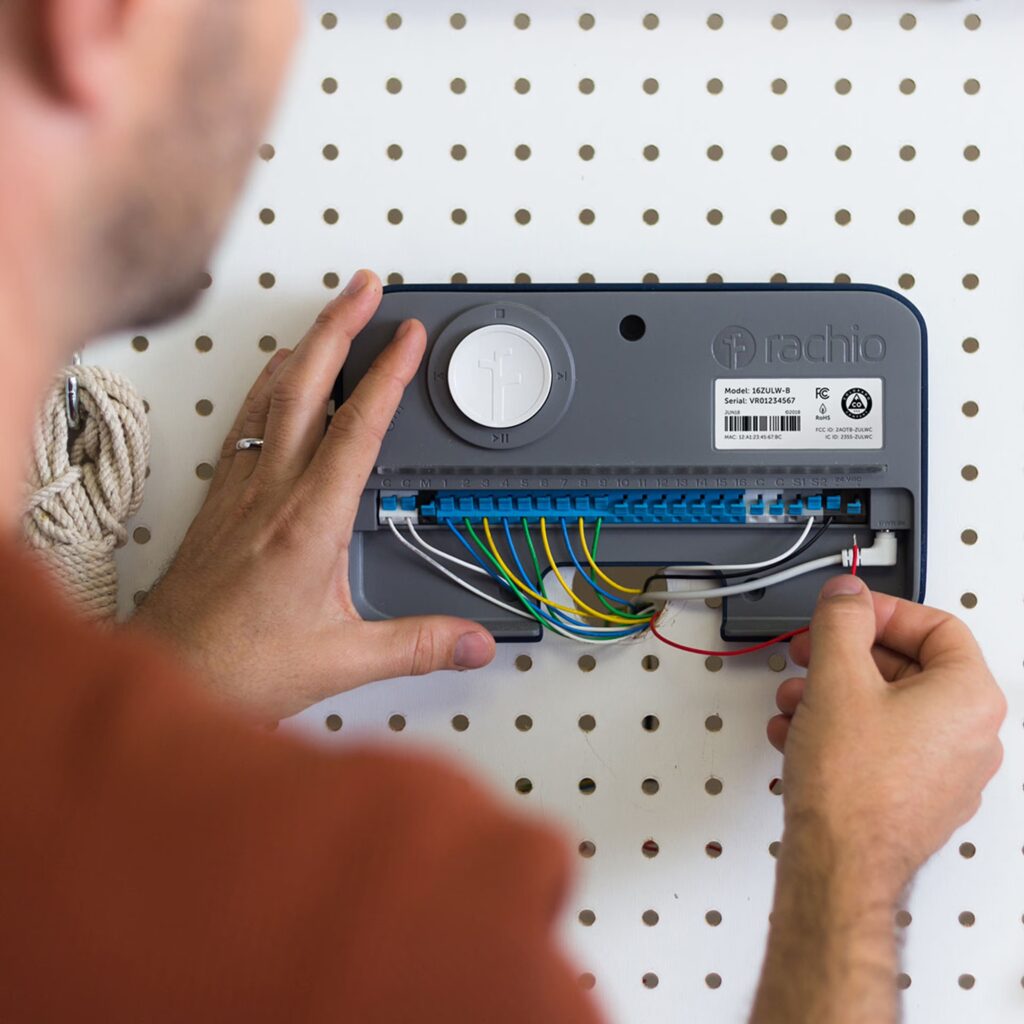
The Rachio controller connects to local weather services and adjusts irrigation schedules automatically. Users can create customized zones for different plant types, ensuring precise watering.
This system is particularly relevant for residential gardens and urban landscapes where water conservation is a priority. Its mobile app provides real-time monitoring, allowing homeowners to optimize watering even when away from home.
2. Rain Bird ESP-TM2 Smart Controller
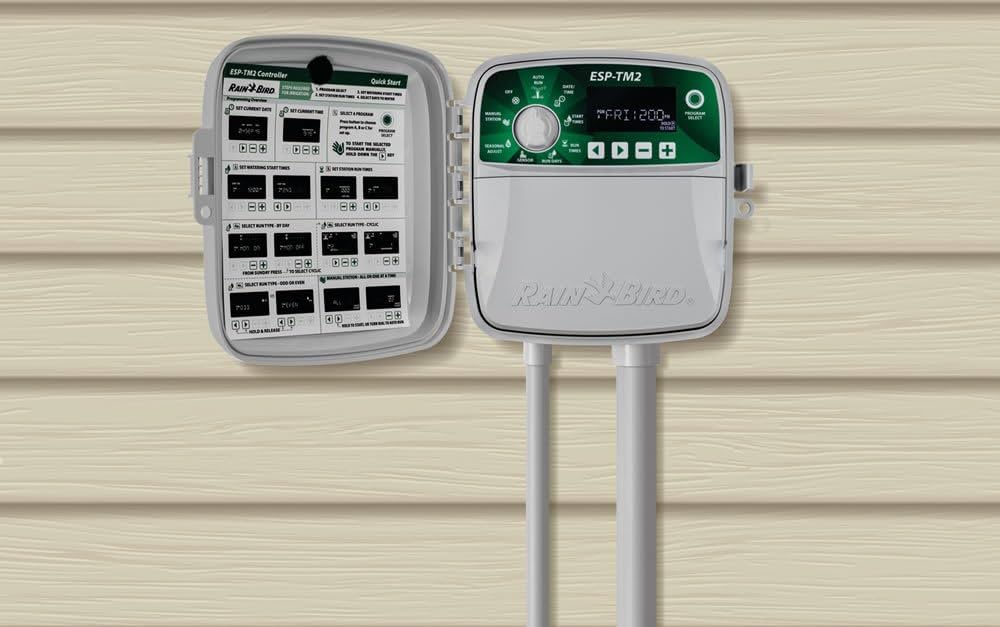
Rain Bird’s smart irrigation controller combines weather data integration and advanced programming for commercial and residential properties. It can manage multiple zones and adjust watering based on plant-specific needs.
This product ensures efficiency in larger landscapes, such as golf courses or public parks, reducing water consumption and improving overall landscape health. Its adaptability makes it suitable for both new installations and retrofitting existing systems.
3. Hunter Hydrawise Wi-Fi Controller
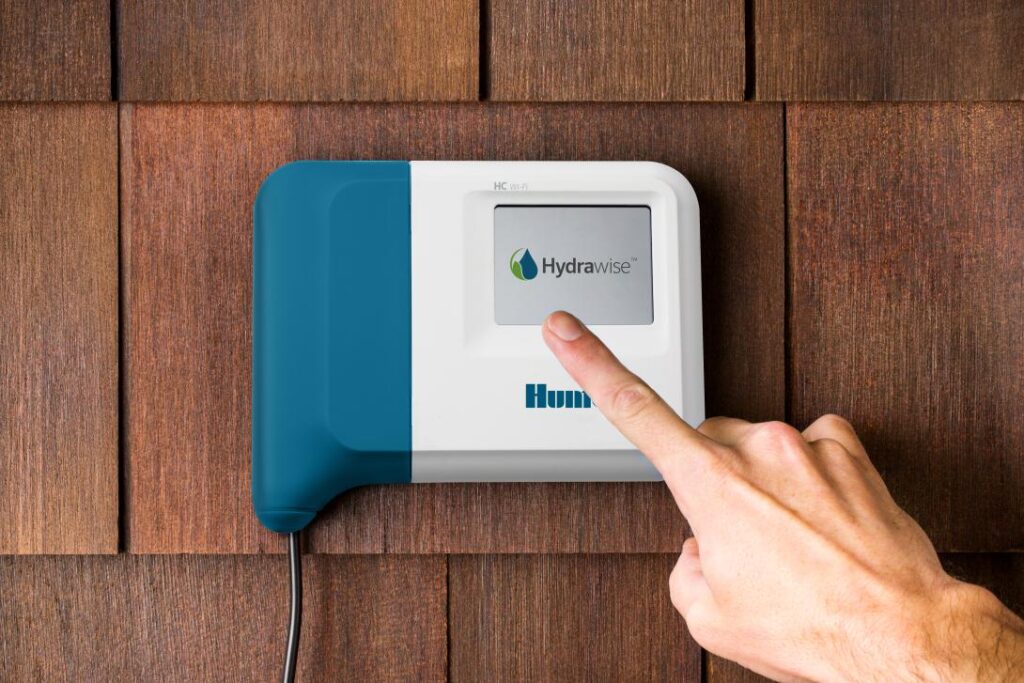
The Hunter Hydrawise controller uses Wi-Fi connectivity to monitor weather conditions and soil moisture. It provides analytics and insights, helping landscape managers make informed irrigation decisions.
For commercial applications, such as hotels or corporate campuses, this system ensures large green areas are maintained efficiently without wasting water or labor resources. Its predictive capabilities make it ideal for sustainable water management.
4. Toro Evolution Smart Controller
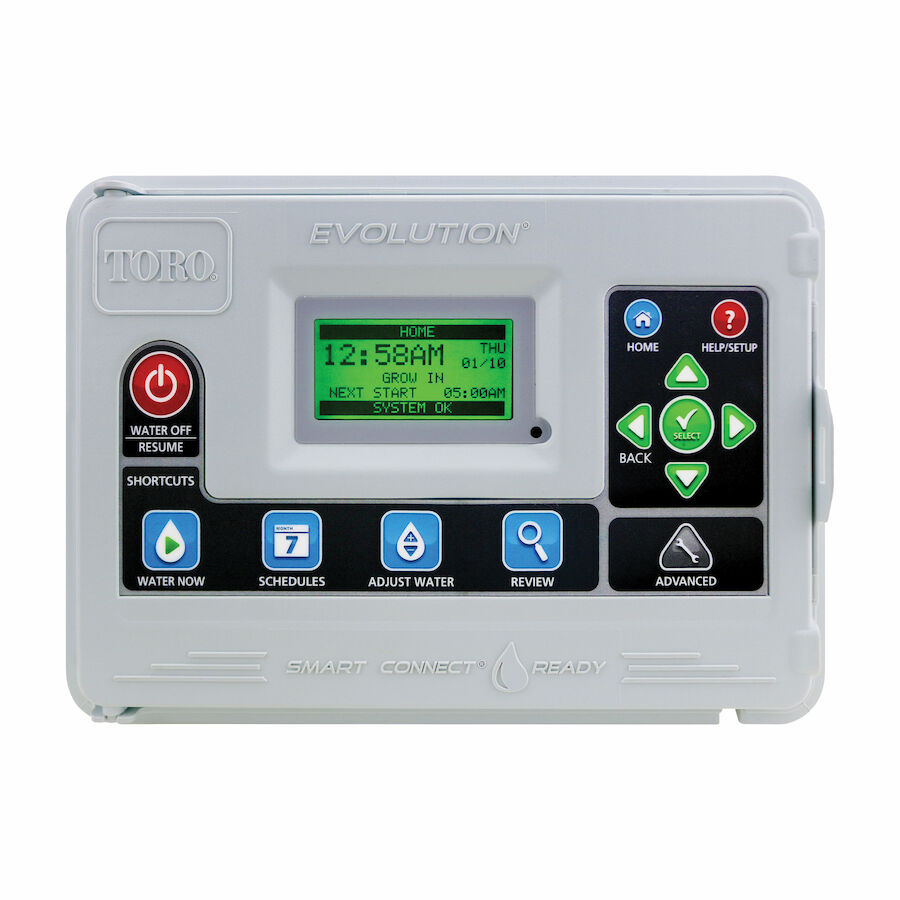
Toro’s Evolution controller incorporates intelligent scheduling, weather integration, and IoT connectivity. It allows landscape professionals to remotely monitor and control irrigation, ensuring optimal water distribution.
This system is useful for both residential and large-scale landscapes, providing precise watering for various plant types and terrain conditions. It also reduces operational costs and manual intervention.
Practical Use Cases of Smart Irrigation Systems
Residential Landscaping
Homeowners can use smart irrigation systems to maintain lush lawns and gardens while conserving water. Systems like Rachio or Toro allow homeowners to program watering schedules for different plant zones, ensuring efficiency even during droughts or peak water demand periods.
Commercial Properties and Public Spaces
Hotels, office complexes, parks, and schools benefit from smart irrigation by reducing labor and water costs. Automated systems can handle complex landscaping needs across large areas, maintaining aesthetic appeal while minimizing resource consumption.
Agricultural and Farming Applications
Support precision agriculture by delivering water efficiently to crops based on soil moisture, weather, and crop requirements. This approach reduces water usage, improves yields, and promotes sustainable farming practices.
How Technology Enhances Smart Irrigation
Technology is central to smart irrigation systems. Cloud connectivity, IoT sensors, predictive algorithms, and mobile apps create an integrated ecosystem for water management. Real-time monitoring ensures that irrigation adapts to environmental changes, plant growth stages, and seasonal variations.
Automation reduces the need for manual labor, while data analytics help landscape managers optimize water distribution and identify potential issues early. Technology transforms traditional irrigation into an efficient, sustainable system that balances cost, water conservation, and plant health.
Frequently Asked Questions (FAQ)
Q1. What is a smart irrigation system?
A smart irrigation system is an automated watering solution that uses sensors, weather data, and controllers to deliver precise water amounts based on real-time plant and soil needs.
Q2. How do smart irrigation systems save water?
These systems monitor soil moisture, temperature, and rainfall, adjusting watering schedules accordingly. By delivering water only when and where it is needed, they prevent overwatering and runoff.
Q3. Can smart irrigation systems be used for both residential and commercial landscapes?
Yes, they are versatile and scalable, suitable for small residential gardens, large commercial properties, public parks, and agricultural fields, providing efficient water management in all settings.